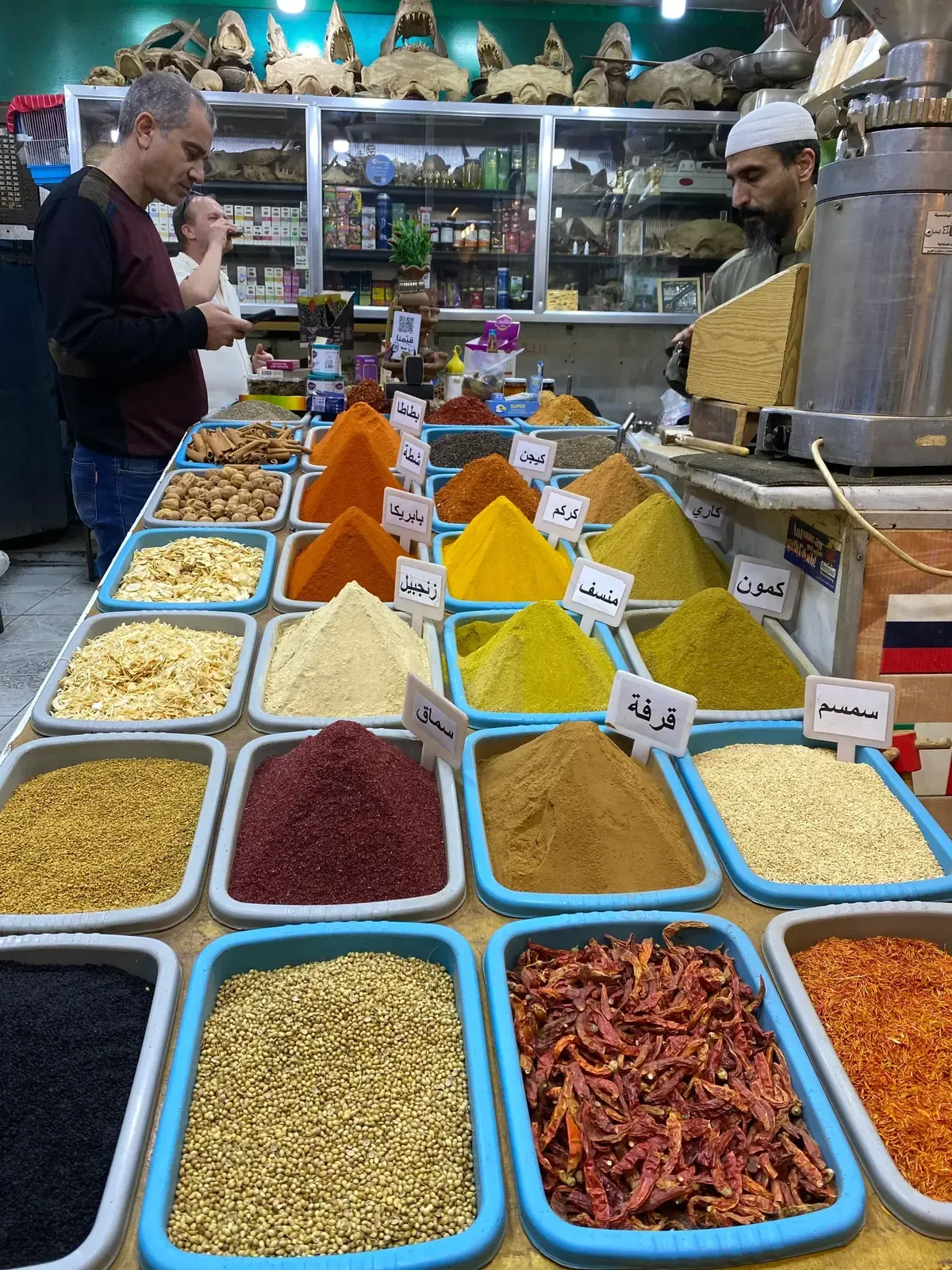
Walking through the narrow alleys of Aqaba’s Old Town, your senses are immediately greeted by a symphony of aromas. The scent of roasted coffee mingles with the sharp tang of citrus and the warm, earthy notes of ancient spices. Aqaba's souks (markets) are a treasure trove for food lovers, and bringing home fresh spices is the perfect way to keep the memory of your Jordanian adventure alive in your own kitchen.
But with mounds of colorful powders and seeds on display, where do you start? Here is our local’s guide to the **5 Spices You Must Buy in Aqaba**, and how to use them to recreate authentic Jordanian flavors.
1. Za'atar (The Green Gold)
No Jordanian pantry is complete without **Za'atar**. It’s not just a spice; it’s a way of life. This aromatic blend typically consists of dried wild thyme, toasted sesame seeds, and sumac.
How to use it: The classic Jordanian breakfast involves dipping fresh bread into high-quality olive oil and then into a bowl of Za'atar. It’s also fantastic sprinkled over labneh (strained yogurt), roasted vegetables, or grilled chicken.
2. Sumac (The Lemony Zest)
That deep red, coarse powder you see everywhere? That’s **Sumac**. It has a tart, citrusy flavor that adds a beautiful brightness to dishes without the liquid acidity of lemon juice.
How to use it: It is a key ingredient in **Musakhan** (chicken with onions and sumac bread) and is essential for dusting over hummus, salads (like Fattoush), and grilled meats (kebabs).
3. Mansaf Spice Blend (Hawajeh)
If you’ve fallen in love with Jordan’s national dish, **Mansaf**, you need this secret weapon. The **Mansaf Spice Blend** (often called Hawajeh or Baharat Mansaf) is a unique mixture that usually includes turmeric, cumin, coriander, and other warming spices.
How to use it: While specifically designed for the Jameed (dried yogurt) sauce in Mansaf, it also adds a wonderful golden color and earthy depth to rice pilafs and vegetable stews.
4. Cardamom (The Coffee Companion)
In Jordan, coffee is a symbol of hospitality, and **Cardamom** is its soul. You will see large sacks of these green pods in every spice shop. Jordanians grind cardamom pods directly with the coffee beans to create that signature aromatic brew.
How to use it: Crack a few pods into your morning coffee or tea for an instant mood lift. It’s also used in savory rice dishes and desserts to add a floral, eucalyptus-like note.
5. Seven Spices (Baharat)
This is the workhorse of the Levantine kitchen. **Seven Spices** (Baharat) is an all-purpose blend that typically contains black pepper, allspice, cinnamon, cloves, nutmeg, cardamom, and coriander. Every family and shop has their own slight variation.
How to use it: Use it as a dry rub for meats (lamb, beef, or chicken) before grilling, or stir a teaspoon into your tomato sauces and stews for an instant "home-cooked" flavor profile.
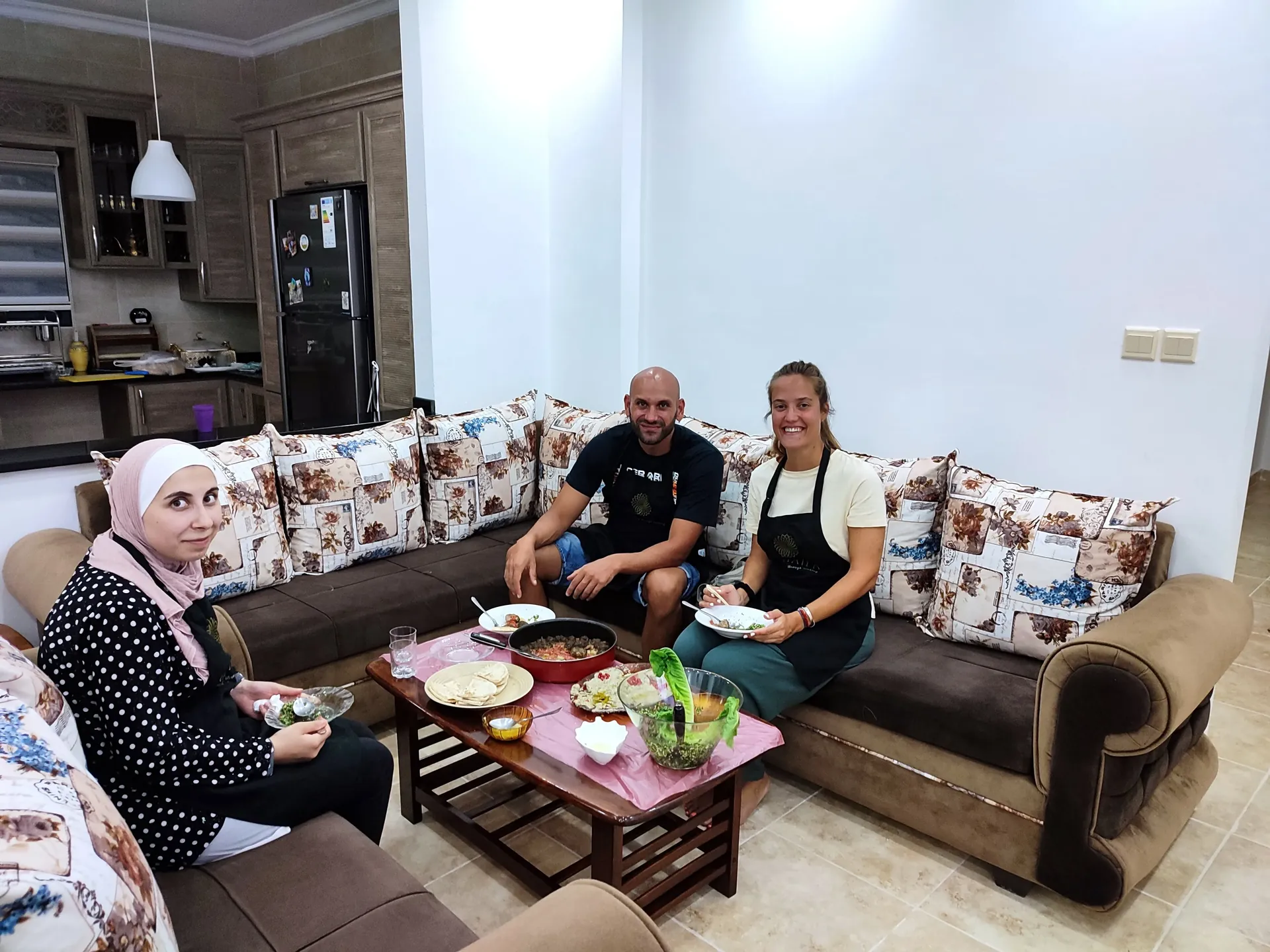 A traditional spread where these spices come to life.
Where to Buy Spices in Aqaba
Avoid the supermarket aisles! For the freshest and most potent spices, head to the **Old Market (Souk)** in downtown Aqaba. The vendors here are incredibly friendly and will often let you smell and taste before you buy. Don't be afraid to ask for recommendations or how to store them.
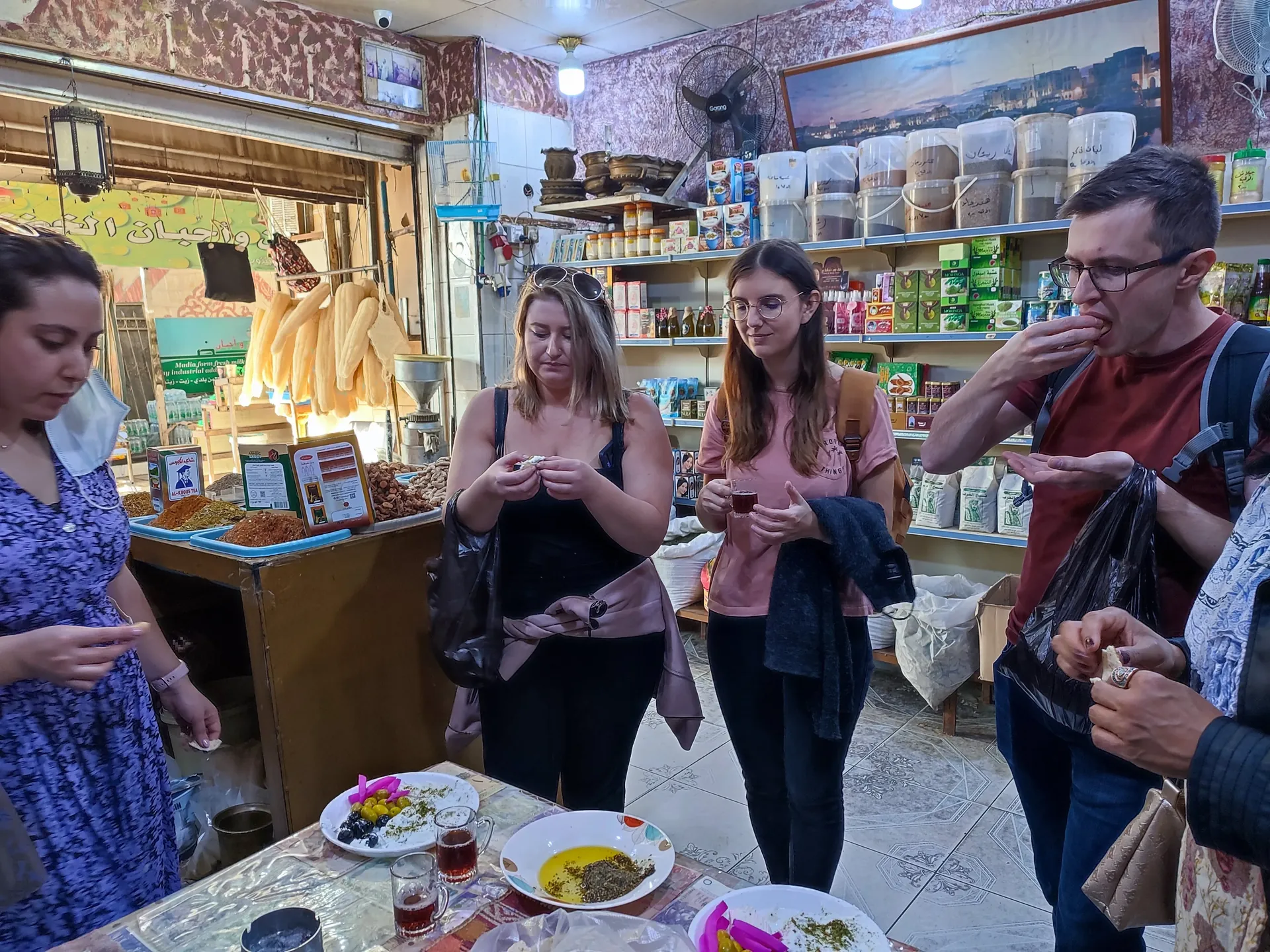
 Our walking tour guests enjoying local hospitality and tea at a spice shop.
Exploring the spice markets is a sensory journey that connects you to the history and culture of the spice trade routes that once passed through Aqaba. Book your local experience today and let us show you the hidden corners of the souk where the locals shop!