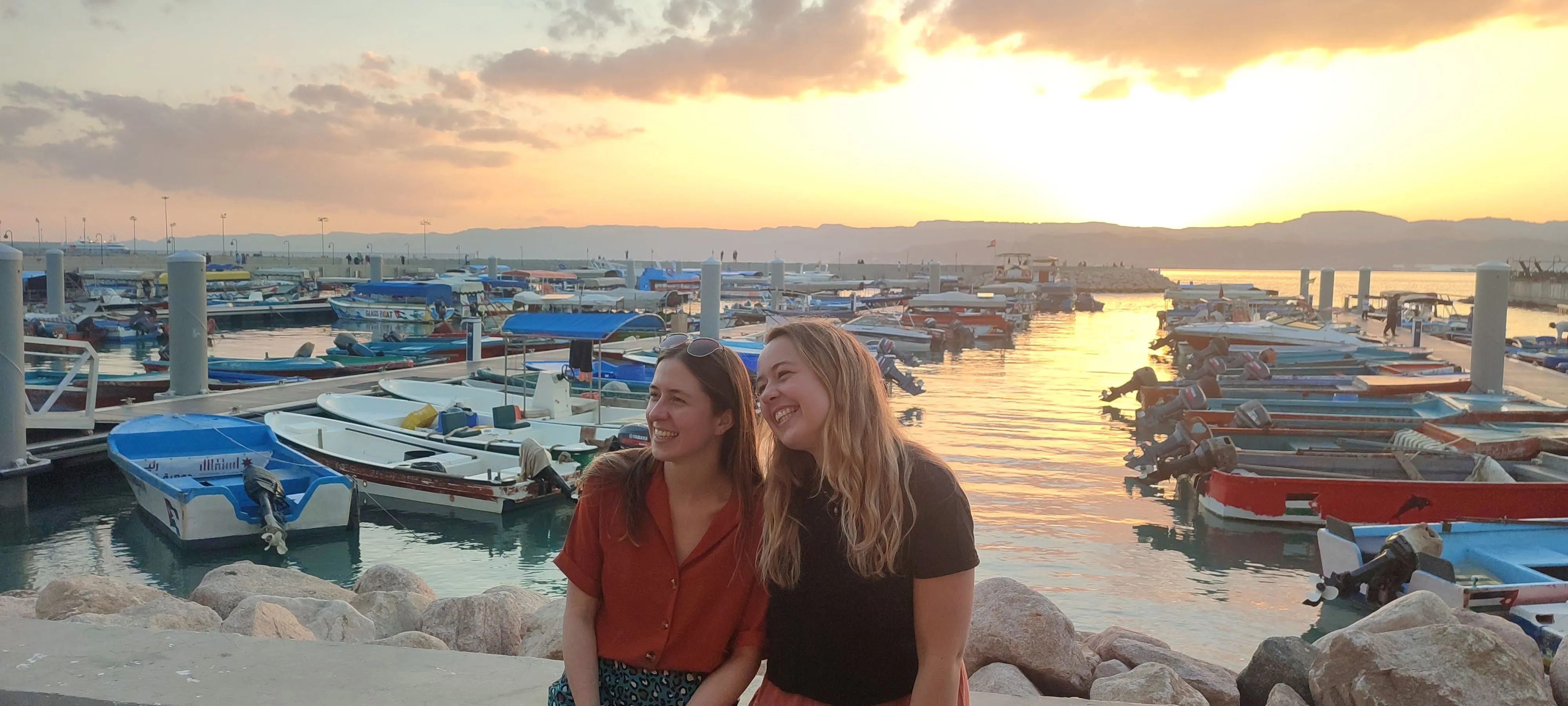
Aqaba is Jordan's only coastal city, located at the southernmost tip of the country. It is inhabited by a homogeneous mixture of Arab people, with roots tracing back to Hijaz, Syria, Egypt, and Palestine. This unique blend has created a common dialect that sets Aqaba locals apart from other Jordanians. Historically, Aqaba was under Egyptian rule in 1892 and Saudi rule until 1924, before becoming part of the independent Emirate of Jordan. This rich history is reflected in the diverse cultural tapestry of the local population today.
Strategic Location and Maritime Life
Aqaba occupies a strategic location as Jordan's only maritime port, connecting ancient continents and holding significant economic, cultural, and political value from the Stone Age to the modern era.
For generations, locals relied mainly on fishing. Fish were abundant until 1967, reaching markets as far as Syria, Palestine, and Saudi Arabia. Fishermen would start their trips early in the morning at 6:00 AM, returning at sunset to sell their catch to locals waiting on the beach. If the catch was huge, it was taken to the local fish market, though they always cared to keep some for their own homes.
Culture and Traditions
The **Simsimiyya**, a traditional lyre, was the fisherman's companion. After spending several days at sea, fishermen would sit on the shore, light a fire, grill fresh fish, play the simsimiyya, and sing traditional Aqaba songs.
One popular traditional game was **"Al-Sijja,"** played with colored stones and palm branches. Locals also utilized **"Al-Hafa'ir"** (pits)—plots of land used as home gardens where they planted date palms and watered them from wells near the shore. This unique irrigation allowed for growing spinach, mint, and arugula in Aqaba's hot climate.
Weddings in Aqaba are a grand affair. The first night, called **"Al-Sahra,"** is a gathering for men to sing and enjoy time together. This is often followed by **"Al-Rafihi,"** a traditional dance where men join hands in a circle, with sword play in the center. The next day involves a massive feast of Bukhari rice shared with guests.
 Traditional dining and gatherings are at the heart of Aqaba's culture.
The Ancient City of Ayla
The archaeological site of **Ayla** dates back to the 7th century AD. Founded by Caliph Uthman ibn Affan, it is considered one of the first Islamic cities built outside the Arabian Peninsula and the first built according to Islamic urban planning principles.
Ayla served as a key hub connecting the Arabian Peninsula with the Levant and Egypt, and a vital stop for pilgrims heading to Mecca. The city featured:
- Walls and Towers: A rectangular defensive wall with towers and gates like the "Egyptian Gate" and "Hejaz Gate."
- The Grand Mosque: Located in the city center, built over a Roman-era street.
- Streets and Markets: A regular network connecting the mosque, markets, and gates.
Ayla represents the "Amṣār"—early Islamic settlements that transitioned from military camps to fully developed cities, balancing residential, religious, and political functions.
A Deep Historical Timeline
Aqaba's history stretches back thousands of years:
- Early Bronze Age (3500–2000 BC): Evidence of agricultural settlements and copper trade with Sinai and Nubia.
- Iron Age (1200 BC): Known as "Elot" or "Ezion Geber," a trade hub for the Edomites.
- Nabatean Period: Connected to the Incense Route, serving as a major seaport.
- Roman & Byzantine Period: Known as **Aila**. It was the terminus of the Via Nova Traiana road and became a Christian center with a bishopric.
- Islamic Period: The city of Islamic Ayla flourished until a devastating earthquake in 748 AD (The Great Levant Earthquake) destroyed much of its infrastructure.
Aqaba Castle (Mamluk Fort)
The Aqaba Fort, also known as the Mamluk Castle, played a significant role in the region's defense. Built in a square layout typical of Mamluk architecture, it features:
- Corner Towers: Four defensive towers used as lookout points and for archers.
- Central Courtyard: An open space for training soldiers.
- Living Quarters & Mosque: Barracks for soldiers and a small mosque for religious practices.
- Administrative Rooms: A command center on the eastern side for planning and operations.
From the ancient stones of Ayla to the vibrant culture of modern fishermen, Aqaba is a city of layers, waiting to be explored.